
THE SOLO TRAVELLER
Your world. Your way.
Confidence and Safety

Photographer: Trifonov Evgeniy | iStock.
Travel in an unpredictable climate
By Josh Chandler
Briefly …
Extreme weather is no longer a distant concern sitting outside the travel experience. From heatwaves and floods to wildfire smoke and shifting seasonal patterns, travellers are increasingly reconsidering where they go, when they travel, and how much certainty they need before booking the journey.
For generations, travellers planned around seasons with a certain confidence. Summer meant Europe, winter meant snow, and shoulder seasons offered the promise of fewer crowds and milder conditions. Increasingly, however, the weather itself has become part of the uncertainty. Heatwaves, wildfire smoke, flooding, storms and shifting seasonal patterns are no longer occasional background concerns sitting outside the travel experience. For many travellers, they are now part of the decision-making process from the very beginning.
Across the travel industry, operators are seeing travellers ask different questions. Concerns once largely limited to travel insurance policies or last-minute disruptions are beginning to shape where people go, when they travel, and how comfortable they feel committing to plans months in advance. Some travellers are avoiding peak summer altogether. Others are booking later, seeking cooler destinations, or building greater flexibility into itineraries that once felt relatively predictable.
For solo travellers, these shifts can carry additional weight. Travelling alone often brings greater freedom and adaptability, but it can also sharpen the pressures of uncertainty when plans change unexpectedly. A solo traveller rerouting because of wildfire smoke, navigating transport disruptions during flooding, or reassessing whether a destination will simply be too hot to enjoy faces those decisions without the reassurance of shared problem-solving or support. At the same time, solo travellers are often among the most flexible, able to pivot quickly, travel lighter, and adapt itineraries in response to changing conditions.
“… solo travellers are often among the most flexible, able to pivot quickly, travel lighter, and adapt itineraries in response to changing conditions.”
According to recent research commissioned by Booking.com and independently conducted among a sample of 32,500 respondents across 35 countries and territories, extreme weather is actively reshaping travel choices and timings. Nearly three quarters of all survey respondents said they consider extreme weather risk when choosing destination (74%) and timing (74%).
Globally 68% say they actively avoid destinations known for extreme weather, 55% find extreme weather stressful when booking a trip and 55% feel unpredictable weather makes it hard to know when to travel. Strikingly, almost a third of travellers globally (31%) reported having cancelled or changed trip plans in the past twelve months due to extreme weather or natural disasters, such as high temperatures, storms, wildfires and floods.

A wildfire burning in Cesme, Turkey, causing widespread destruction. Photographer: Klenger | iStock.
More than half of all those surveyed (55%) said that certain destinations had become too hot to travel to when they wanted to visit them, and that they had removed destinations from their travel wish list due to news of extreme weather or natural disasters (52%). Similarly, in a survey of 3,715 hotel and accommodation providers across 18 countries, 24% said they had also experienced operational disruptions due to extreme weather in 2025, and 40% of them had adjusted their operations in response to existing or potential climate-related risks such as heatwaves or storms.
To better understand how extreme weather and environmental unpredictability are reshaping modern travel, we invited two of our trusted specialised travel and tourism operators working across remote, adventure, and experience-led tourism to share their perspectives and experiences from the ground.
Forward Travel

King George Island, Antarctica. Photographer: Don Fink | iStock.
David Smyth is the Founder of Forward Travel, a company specialising in carefully curated journeys designed around connection, cultural depth, wilderness experiences, and responsible travel. Working closely with trusted local partners across remote and environmentally significant destinations, David and his team regularly navigate the practical realities of operating travel experiences in regions increasingly affected by changing weather patterns and environmental uncertainty. In this Q&A, David shares his insights into how extreme weather is reshaping traveller expectations and the practical realities of modern travel planning.
Extreme weather events are becoming more visible across many destinations. How has this changed the way you assess risk and plan itineraries in recent years?
Extreme weather events are more and more a consideration in how we design and manage itineraries. In recent years, increasing variability in rainfall, temperature extremes, and disruption from events such as flooding, cyclones, and wildfires has required a more proactive approach to planning. We now place greater emphasis on up-to-date seasonal intelligence, working closely with our in-country partners to monitor conditions in real time. This allows us to adapt itineraries where necessary, sometimes at short notice, to ensure both safety and continuity of travel. Flexibility is also built into our itineraries from the outset, with alternative routing and contingency arrangements identified in advance. This allows trips to remain in place, even when conditions change unexpectedly.
“This allows us to adapt itineraries where necessary, sometimes at short notice, to ensure both safety and continuity of travel.”
When severe weather affects a destination, how do you balance traveller safety with the realities of schedules, costs, and expectations?
Where severe weather impacts a destination, obviously safety is always the primary consideration and is never compromised. Decisions are guided by real-time information from our in-country partners, aviation updates and local authorities. From there, our focus shifts to maintaining communication and clarity with our clients. Wherever possible, travellers are kept fully informed throughout the decision-making process, including while on the ground. Where changes are required, we work to adjust itineraries in a way that preserves the current experience while ensuring practical alternatives are in place.
“Where changes are required, we work to adjust itineraries in a way that preserves the current experience while ensuring practical alternatives are in place.”
At times there may be a commercial reality to manage, so we aim to make decisions early where possible to reduce disruption, additional costs, and last-minute changes, again including our travellers where possible in any decisions made. Open communication is essential, as this ensures expectations are managed transparently and options are clearly explained at each stage.
Have you noticed travellers becoming more cautious or asking more questions about weather, heat, wildfire risk, flooding, or seasonal unpredictability before booking?
Our clients are asking more detailed and specific questions around climate conditions and seasonal risk factors. This includes increased queries into heat levels during peak summer months, wildfire exposure in certain regions, rainfall variability, and the potential for flooding or storm-related disruptions. Travellers increasingly want to understand not only the best time to travel, but also the practical implications of climate variability on comfort, accessibility, and overall experience.
“Travellers increasingly want to understand … the practical implications of climate variability on comfort, accessibility, and overall experience.”
In response, we place greater emphasis on transparent pre-booking advice, providing realistic and honest seasonal guidance and setting clear expectations around environmental conditions. This ensures travellers can make confident decisions with a full understanding of what to expect on the ground.
Can you describe a moment when extreme weather significantly disrupted a trip or operation, and what you learned from managing it?
One example involved delays to flights into King George Island to meet an Antarctic expedition. Severe and rapidly changing weather conditions in the region resulted in a stoppage of aircraft movements. This had a direct knock-on effect for the wider expedition logistics, including vessel coordination and onward timing into Antarctica. The main challenge was the limited flexibility inherent in polar operations, where weather windows are narrow and infrastructure is minimal. With flights delayed, we had to quickly rework passenger staging plans, adjust accommodation contingencies in Punta Arenas, and maintain constant communications with our guests as they would be required to move on potentially short notice once the weather cleared.
The key learning was the importance of embedding redundancy into every stage of polar routing, particularly buffer days, flexible supplier agreements, and clear traveller communication protocols. It also reinforced that in extreme environments, schedule certainty and managing expectations transparently is just as critical as managing logistics on the ground.
Do you think travellers are beginning to rethink when and where they travel because of weather uncertainty? If so, how are you adapting your offering?
We are seeing more travellers prioritise seasonal reliability, opting for ‘shoulder’ periods or alternative regions that offer greater climatic stability. In some cases, destinations that were traditionally considered peak-season favourites are being reconsidered if perceived risks around heat, flooding, or disruption are higher at certain times of year.
In response, we place stronger emphasis on seasonal guidance at the planning stage, helping travellers understand not just when a destination is popular, but when it is most resilient in terms of weather conditions. We also build greater flexibility into itineraries, including alternative routing options and contingency planning where appropriate. The approach is less about avoiding destinations and more about optimising timing, structure, and expectations to align with evolving environmental realities.
Travel insurance has become a more central consideration in response to increasing weather-related disruption. Travellers are now paying closer attention to the scope of cover, particularly around trip delays, cancellations, and itinerary changes caused by extreme weather events. From an operational perspective, we encourage clients to ensure their policy reflects the realities of modern travel, including adequate protection for weather-related disruption, as this provides an important layer of reassurance when conditions are unpredictable.
You can find David and Forward Travel in our ‘Solo Smart’ Traveller Directory here.
Cape York Motorcycle Adventures
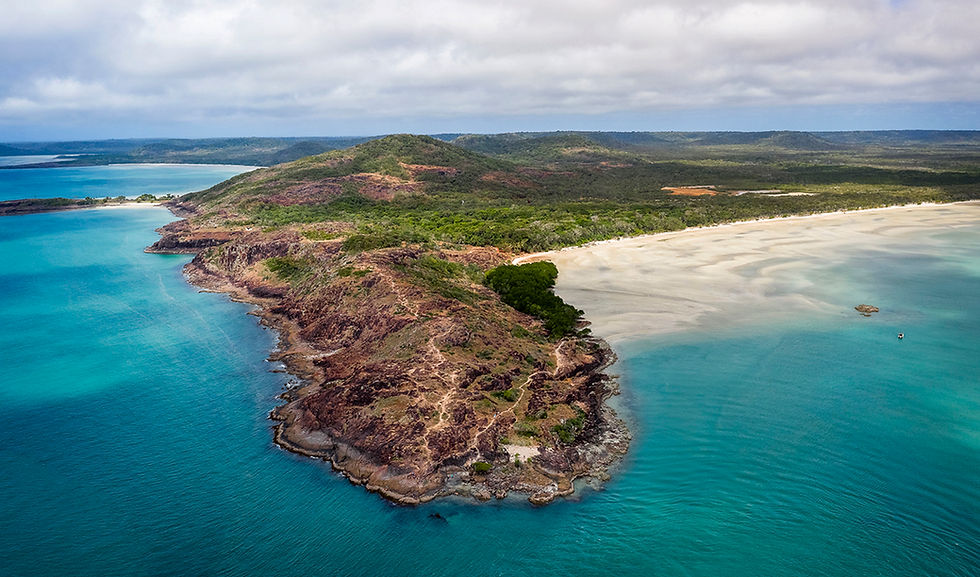
The tip of Cape York, Far North Queensland. Photographer: Dominic Jeanmaire | iStock.
Cape York Motorcycle Adventures has been operating remote off-road motorcycle expeditions through Far North Queensland since 1990. Founded by Roy and Renae Kunda, the company specialises in fully supported, safety-focused journeys across some of Australia’s most rugged and environmentally challenging terrain. With decades of experience navigating remote conditions, the team regularly manages the realities of weather, isolation, changing road access, and environmental unpredictability. In this Q&A, Renae shares her perspective on how extreme weather is influencing traveller expectations and the logistical demands of remote adventure travel.
After more than three decades operating remote motorcycle adventures through Cape York, we’ve learned that weather isn’t a disruption to the experience – it is the experience. Out here, nature always has the final say. Cape York has always been unpredictable, but what’s changed is the intensity and frequency of extreme events. Wet seasons arrive harder, crossings rise faster, and conditions can change within hours.
Today, we no longer plan around ‘average conditions’, we plan around variability. Our planning is built on self-reliance and back-up plans, flexible itineraries rather than fixed schedules, real-time local intelligence (not just forecasts that are often wrong), and conservative decision-making around remote accesses. Experience has taught us that the safest plans are the ones you are willing to change at a moment’s notice.
“Experience has taught us that the safest plans are the ones you are willing to change at a moment’s notice.”
When severe weather affects a destination, how do you balance traveller safety with the realities of schedules, costs, and expectations?
Safety isn’t a competing priority – it’s the foundation of the experience. We set expectations early. Our travellers understand that in remote Australia, adaptability is part of the journey. If conditions shift, we adjust routes, delay crossings, or reroute entirely. Yes, it can impact schedules or expectations, but most travellers quickly realise that these decisions are what make the experience authentic and safe. Interestingly, those moments often become the most memorable parts of the trip, for example, when the Jardine River Ferry breaks down, we use a friend’s fishing tinny to get the bikes across. That’s a photo-worthy adventure!

When the Jardine River Ferry breaks down, we use a friend’s fishing tinny to get the bikes across. Image © courtesy Cape York Motorcycle Adventures.
Have you noticed travellers becoming more cautious or asking more questions about weather, heat, wildfire risk, flooding, or seasonal unpredictability before booking?
Absolutely. We’re seeing far more questions around heat and hydration, river crossings and flooding, seasonal timing and emergency protocols. We see this as a positive shift. Today’s travellers are better informed and more aware of risk, but they’re still seeking adventure. They just want to know they’re in capable hands. That trust is built through longevity, transparency, experience, proof, and clear communication.
Can you describe a moment when extreme weather significantly disrupted a trip or operation, and what you learned from managing it?
There have been many, but one that stands out was when we were filming for Sunrise on Channel 7, and the Cape played up dramatically and unseasonably. What had been manageable crossings for most of the season became problematic. There were sudden rises in river levels, making bridges impassable in September, which is unheard of. We had a deadline to make for the show, but we had no choice but to wait it out. That meant adjusting plans, managing expectations, and ensuring everyone stayed calm and comfortable in a remote environment. The key lesson? You can’t fight the environment – you just have to work with it. Preparation is critical, but so is mindset. Calm leadership and clear communication matter just as much as logistics.
“You can’t fight the environment – you just have to work with it. Preparation is critical, but so is mindset. Calm leadership and clear communication matter just as much as logistics.”
Do you think travellers are beginning to rethink when and where they travel because of weather uncertainty? If so, how are you adapting your offering?
Particularly around seasonal timing, we’re seeing more travellers choosing the drier shoulder seasons rather than the peak season, asking about weather patterns before committing, and prioritising guided experiences in remote regions. In response, we’ve adapted by providing clearer guidance on conditions, designing itineraries with built-in flexibility, and educating travellers on what to expect, not just where they’re going. The goal is to replace uncertainty with understanding.
One thing I strongly believe is this: respect the environment, but don’t fear it. Some of the most meaningful travel experiences happen when things don’t go to plan. Choose operators with proven experience in the region, build flexibility into your schedule, prepare for a wider range of conditions than expected, and trust local knowledge rather than relying solely on forecasts.
You can find Cape York Motorcycle Adventures on our ‘Solo Smart’ Traveller Directory here, and Renae on our ‘Solo Smart’ Traveller Directory here.
Data source: Booking Holdings Sustainability Report 2025.
Josh Chandler is a writer and passionate solo traveller who is based in Europe.