
THE SOLO TRAVELLER
Your world. Your way.
Nature and Wildlife

Royal Bengal Tigers in Bandhavgarh National Park.
India’s wild heart
By Josh Chandler
Briefly …
At dawn, the forest holds its breath. By dusk, the rivers glow gold. Madhya Pradesh gathers India’s great wilderness into one vast, untamed sweep.
For those of us drawn to wild places, there are moments we know almost instinctively, like the pause before sunrise when the forest holds its breath and light gradually reveals every contour of the landscape. The air is cool and still, carrying the faintest sounds of our surrounds waking, each rustle and call strangely amplified. As the forest comes to life, so do its inhabitants, glimpsed perhaps only fleetingly, yet enough to tell us that today will be remarkable. And in central India, that feeling stretches for seemingly endless and unbroken miles.
Madhya Pradesh – the second largest Indian state by area after Rajasthan – is not defined by a single park or one headline reserve, but by scale. Eleven national parks, twenty-four wildlife sanctuaries, nine tiger reserves, and three biosphere reserves. Together they form one of India’s largest interconnected forest systems, a landscape that supports a significant share of the country’s tiger population and an extraordinary density of biodiversity.

Kanha National Park.
For wildlife travellers, the names read like a roll call. Bandhavgarh National Park is dramatic, dense forest wrapped around an ancient hilltop fort, known for some of the highest tiger visibility in the country. Kanha National Park is expansive, with its sal (a slow-growing, hardwood species) forests opening into sweeping meadows where barasingha (also known as the swamp deer) move through morning mist and leopards keep to the edges.
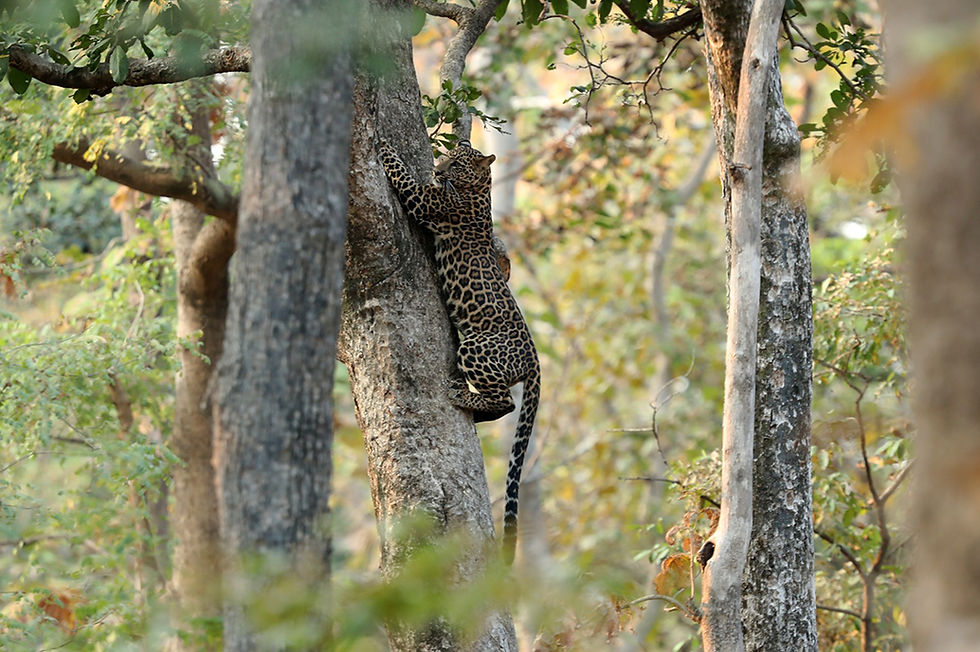
Majestic leopard spotted at Pench National Park.
Pench National Park, straddling the Maharashtra border, is teak forest and filtered light, home to dhole, wolf, leopard and prolific birdlife. Then comes Satpura National Park, which quietly shifts the pace. Here, tourism is deliberately restrained. You can walk, and you can drift by boat along the Denwa River, resulting in a forest experience that is deeply immersive rather than purely observational.

Satpura National Park’s hidden treasure is the Royal Bengal tiger in its untamed glory.
Along the Ken River, Panna National Park blends plateau and water, offering boat-based wildlife viewing where marsh crocodiles bask and aquatic birds arc overhead. And in Kuno National Park, India’s ambitious cheetah reintroduction program has returned one of the world’s fastest predators to a landscape it once roamed.
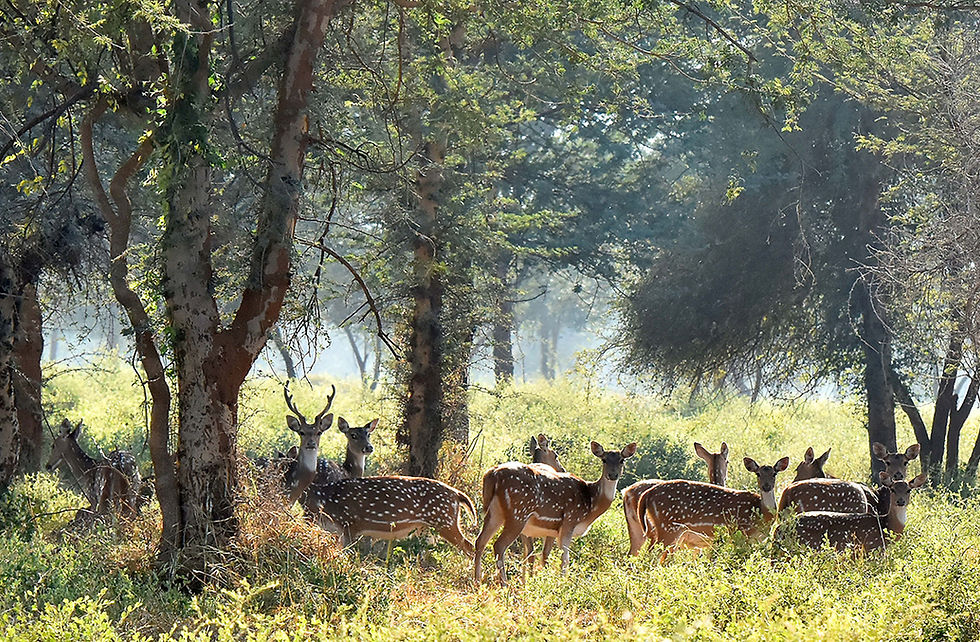
Chinkara, also known as Spotted Deer, at Kuno National Park.
Beyond the flagship reserves, the wider network deepens the experience. Wetland and forest systems such as Gandhi Sagar Wildlife Sanctuary, Sanjay-Dubri Tiger Reserve, and Madhav National Park draw migratory bar-headed geese, painted storks, pelicans and demoiselle cranes. Near the prehistoric Bhimbetka Rock Shelters, the forests of Ratapani Wildlife Sanctuary underscore how long humans and wilderness have coexisted in this region.
Even the capital leans into the narrative. In Bhopal, Van Vihar National Park sits beside the Upper Lake, creating a rare urban–wild interface shaped by modern conservation principles rather than traditional zoo design.
For those who seek wildlife not as spectacle but as immersion, Madhya Pradesh offers coherence. Forests connect to forests, rivers to grassland, and reserves to reserves. It is not a collection of isolated safari moments, but a continuous landscape – alive, protected, and profoundly wild.
Josh Chandler is a devoted solo traveller and writer who is based in Europe.