
THE SOLO TRAVELLER
Your world. Your way.
Adventure

A porter on the Everest Base Camp trek’s Lobuche Pass, Sagarmatha National Park within the Khumbu region of Nepal. Photographer: Arthur Enselme | iStock.
Carrying Everest
By Geoffrey Williams
Briefly …
In May 2026, a new Porter’s House will open high on the Everest Base Camp route, marking a significant step toward not only improving conditions for the porters who carry the journey, but also reshaping how that journey is understood by those who take on the challenge.
Each year, thousands of international travellers set out for one of the world’s most sought-after adventures: the journey to Everest Base Camp. But long before they reach the mountain, there are others carrying the weight of that experience – literally.
In May 2026, the Nimsdai Foundation will open a Porter’s House in Lobuche, a critical stop along the Everest Base Camp route, designed to provide safe, warm, and dignified accommodation for the porters who make these expeditions possible. Located at 5,050 metres (16,568 feet) in Nepal’s Khumbu region, where temperatures can drop well below freezing, porters have historically relied on overcrowded, makeshift conditions offering little protection from extreme weather.
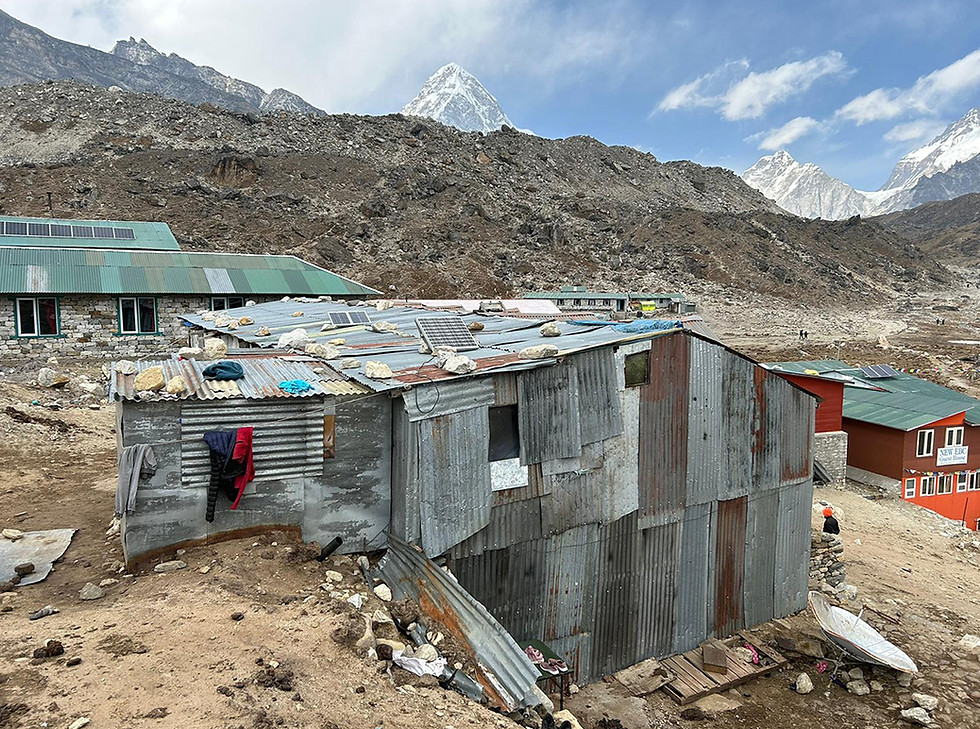
The old Porter’s House at Lobuche. © Image courtesy The Nimsdai Foundation.
The new $500K facility, developed under Project Horizon, will accommodate up to 100 porters at a time, and will include solar-powered energy systems, modern sanitation, and a medical unit to support injuries and emergencies at altitude. The opening of the Porter’s House comes at a time when travellers are increasingly asking not only where they go, but how their journeys impact local communities.
Nirmal ‘Nims’ Purja MBE, Founder of the Nimsdai Foundation, is a former Gurkha and UK Special Forces soldier and a Guinness World Record holder who redefined mountaineering by climbing all 14 of the world’s 8,000-metre peaks in just over six months. “This is about recognition”, Nirmal told The Solo Traveller. “The Porter’s House sends a clear message: you are seen and respected. These are the people who make the impossible possible for others. The project reflects the Nimsdai Foundation’s commitment to improving and championing the dignity and value of porters who support the adventure tourism industry, while contributing to the growing global conversation around ethical travel, labour dignity, and sustainability.”

The Porter’s House under construction, July 2025. © Image courtesy The Nimsdai Foundation.

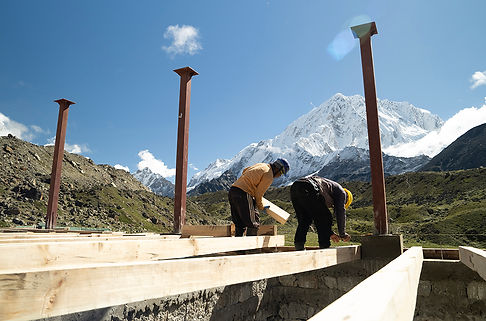
Making progress, August 2025. © Image courtesy The Nimsdai Foundation.

August 2025. © Image courtesy The Nimsdai Foundation.

August 2025. © Image courtesy The Nimsdai Foundation.
A Q&A with Glen Mallen, Executive Director of the Nimsdai Foundation

Glen Mallen, Executive Director of the Nimsdai Foundation.
The Porter’s House is a practical intervention, but it is also a visible shift in how the Everest journey is understood. For travellers passing through Lobuche, it offers an important reminder that no ascent or descent happens alone and that the experience of the mountain extends well beyond those who come to take on the challenge of making it to the summit.
“From concept to completion, this project reflects what is possible when purpose and partnership come together,” Glen tells us. “This is long overdue, and it’s a step toward improving the lives of the people who sustain this entire ecosystem.”
The Everest Base Camp trek is a milestone for travellers. What does the mountain look like from the perspective of the porters who make that journey possible?
From the perspective of the porters, Everest is not a bucket-list destination, it is their home and a place of work. Because of this the porters have a deep respect for the mountain and the local traditions that surround this sacred environment. They, along with the guides, trek these routes hundreds of times in any given season and know the mountain better than anyone.
The traditional roles and jobs in the mountains, which they may have undertaken years ago, have long since disappeared, with the majority of the work in these high-altitude environments now connected to adventure tourism. This means porters regularly engage with people from all cultures and nationalities.
There is no doubt that the work of a porter is demanding. However, the mountain and trekking routes provide vital income that supports them, their families and the wider communities. It is our role to ensure that they are valued for their contribution to those wishing to access these incredible places.
“It is our role to ensure that they are valued for their contribution to those wishing to access these incredible places.”
For those who haven’t seen it firsthand, can you describe the conditions porters have traditionally faced along the route, particularly at high-altitude stops like Lobuche?
Porters are the backbone of the mountain. They can carry heavy loads for climbers and trekkers, as well as supplies necessary for the restaurants and hotels that support those making this journey.
At high-altitude points such as Lobuche, where oxygen levels are significantly reduced, temperatures can plummet well below freezing, and the weather can turn without warning. Many porters have had little to no access to proper shelter, and after long days carrying heavy loads, they often slept in structurally unsafe, overcrowded, and unheated spaces. These are conditions that would be unacceptable in most industries.
If over filled, those not fortunate to secure a place in the porter’s house were required to trek back down the mountain to the next village (about 3 hours away) for accommodation, only to have to return early the next day to continue up the mountain. This reality is exactly what compelled us to act.
The Porter’s House is positioned as a moment of recognition as much as infrastructure. What does recognition actually mean in this context?
Recognition, in this context, means respect, visibility, dignity and equity. Porters are essential but often overlooked, and acknowledging their role as central to the trekking experience is long overdue. It also means creating spaces designed for their wellbeing – safe, warm environments where they can rest and recover. It also means shifting the narrative, encouraging travellers and the industry to see porters not just as carriers, but as skilled professionals of the mountain.
“It also means shifting the narrative, encouraging travellers and the industry to see porters not just as carriers, but as skilled professionals of the mountain.”
Why was Lobuche chosen as the location for this facility, and what role does it play in the broader trekking route?
Lobuche is a critical point on the Everest Base Camp route. At 5,000 metres, it is one of the most physically demanding stops before reaching Base Camp. The original building in Lobuche was not fit-for-purpose, and as a result of our collaboration with local partners and the local community it was agreed that this would be an ideal location to start this change programme. The result would be a visible and physical reminder to all those passing through of the important role the porters play. It is hoped that this location will also increase the awareness and engagement of this project, allowing similar facilities to be developed along the route.
How has the design of the Porter’s House responded to the extreme realities of altitude, weather, and physical strain?
The design was reached through a combination of using experienced and skilled designers, working with the local community and those who will use the building. It is rooted in practicality, sustainability, and respect for the environment. Every decision, from insulation to materials, was made to withstand the extreme cold and high winds.
The building utilises energy efficient materials and incorporates solutions that reduce environmental impact, like the use of solar panels to charge power and storage batteries. The structure is built to endure, but also to support proper sleeping arrangements, protection from the elements, and a space to get food and drink to allow the body to recuperate after intense physical exertion.
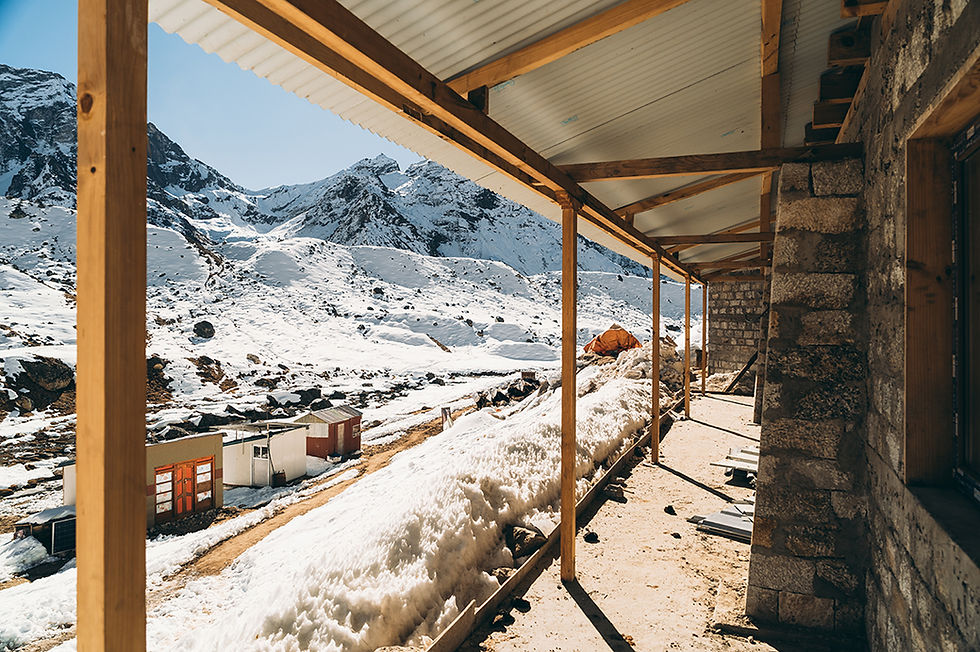
November 2025. © Image courtesy The Nimsdai Foundation.
The project sits within a wider conversation about ethical travel. Where do you see responsibility falling between operators, travellers, and the industry as a whole?
To be effective, responsibility to protect this environment must be shared. At the Nimsdai Foundation, we see this as an opportunity for education and inspiration, empowering all stakeholders to make better choices that uplift everyone involved. Tour operators must commit to fair treatment, proper equipment, and safe working conditions. Travellers, too, influence this by making ethical choices and their awareness of the human impact behind each journey.
How involved were local communities and porters themselves in shaping the design and purpose of the facility?
This project was built with the community, not just for it. We engaged directly with porters and local stakeholders to understand their needs, challenges and priorities. This collaborative approach ensures that the Porter’s House is fit-for-purpose and meets the needs of those that will use it long into the future.
There is often a gap between intention and impact in travel. How does this project ensure it delivers long-term, meaningful change rather than a symbolic gesture?
Sustainable impact requires more than a single intervention; it requires collective accountability and continuity. The Nimsdai Foundation is focused on supporting people and projects, like the Porter House, that have measurable outcomes across all our charitable pillars – Education, Environment, Inspiring Others and Disaster Relief. We also see this as a model, one that can be replicated and scaled. By ‘Redefining what is Possible’, we aim to inspire systemic change rather than isolated acts.
As global interest in Everest continues to grow, what else still needs to change to better support the people behind the industry?
Growth must be matched with responsibility. The key is not to prevent people from visiting these inspiring locations, but to increase the respect shown to the environment and the people that live there. The Nimsdai Foundation believes that the solution to solving many of these issues can only be achieved by working together. We would encourage others to work with us to deliver more of these life changing buildings.
When travellers set out for Everest in 2026 and beyond, what would you hope they understand or perhaps see differently about the journey they are undertaking?
Preparation for Everest should go beyond physical training. Take the time to understand the cultural and human context of the region. Be curious. Be respectful. A more conscious approach to travel has the potential to shape a more sustainable future. We hope they see the journey not just as a personal achievement, but as something made possible through the skilled support of those on the mountain. We hope they recognise the strength and skills of the porters alongside them. And we hope that when they see the Porter’s House they might be encouraged to support the Nimsdai Foundation deliver more projects like this to support the mountain communities.
At the Nimsdai Foundation, our mission is to elevate not just mountains, but the people who call these places home. We would love to hear from anyone that wants to support our initiatives that impact the environment you are enjoying. Please get in touch before or after your adventure.
The Nimsdai Foundation is the philanthropic arm of the Nimsdai brand, dedicated to supporting mountain communities in Nepal, the UK, and beyond. Guided by its mission to redefine what is possible, the Foundation focuses on four key pillars: Education, Environment, Disaster Relief, and Inspiration. Its flagship initiatives include the Porter’s House in Lobuche and Project Odyssey, which provides rehabilitative trekking experiences for veterans. The Foundation is also actively working to preserve access to education through the renovation of a girls’ learning centre in western Nepal.
To learn more, visit The Nimsdai Foundation website here https://www.nimsdaifoundation.org/
Geoffrey Williams is The Solo Traveller Group’s Founder and Publishing Curator.