
THE SOLO TRAVELLER
Your world. Your way.
Risk, Readiness and Respect – A Confidence and Safety Series

Riley Kilham, Head of Endurance at Evolve Human Performance in New South Wales, Australia. Image courtesy Evolve Human Performance.
Training for the trail
A Q&A with Riley Kilham, Head of Endurance at Evolve Human Performance in New South Wales, Australia
Briefly …
How much does physical preparation contribute to safer solo hiking? Endurance coach Riley Kilham shares practical insights into training, fatigue, nutrition and decision-making, arguing that confidence comes from experience rather than pushing beyond your limits.
Having hiked solo through Switzerland and through Australia’s Royal National Park and the Blue Mountains, one thing Riley has learned is that turning back, especially as a solo hiker, is never failure. “Mountains and trails aren’t going anywhere. A lot of incidents happen because people get too attached to finishing the route instead of adapting to the conditions, waiting, and coming back to conquer the beast. The mountains will always win.”
You’ve solo hiked through places as different as Switzerland and the Blue Mountains and national parks closer to home. How does hiking alone change the way you read terrain, weather, and your own limits?
Hiking solo definitely makes you way more aware of everything around you. When you’re with friends, it’s easy to switch off a little and just follow the group, but when you’re alone, you naturally pay more attention to the trail, changes in the weather, the amount of daylight, how far you are from help, and how your body is feeling.
I noticed it heaps in Switzerland compared to somewhere like the Royal National Park in New South Wales. In Switzerland, weather can change incredibly quickly, and the terrain is a lot more unforgiving, so you learn pretty fast not to underestimate things just because a trail looks ‘touristy’ online. Even in the Blue Mountains, conditions can change quickly once you drop into valleys or the more exposed sections. Solo hiking teaches you to constantly check in with yourself instead of just pushing on. One thing I always ask myself while out on the trail is, “If I turn around now, can I still get back the same way I came?”. Hiking solo makes you more honest with your own limits.
“Hiking solo makes you more honest with your own limits.”
Endurance athletes are often comfortable pushing through discomfort, but on long solo hikes that mindset can sometimes become dangerous. How do you distinguish between healthy challenge and the point where it’s smarter to stop, slow down, or turn back?
In running or triathlon, pushing through discomfort is often part of the game, but hiking in remote areas is different because small mistakes can snowball pretty quickly. For me, healthy challenge in the bush still feels controlled. You should never have to work so hard to get somewhere that you are completely and utterly exhausted at the top. You’re working hard, maybe uncomfortable, but you’re still thinking clearly, moving well, eating and drinking properly, and staying aware of your surroundings. The danger zone is when decision-making starts slipping and a healthy challenge to get to the top can be overridden by your ego wanting to see a crazy Strava map.
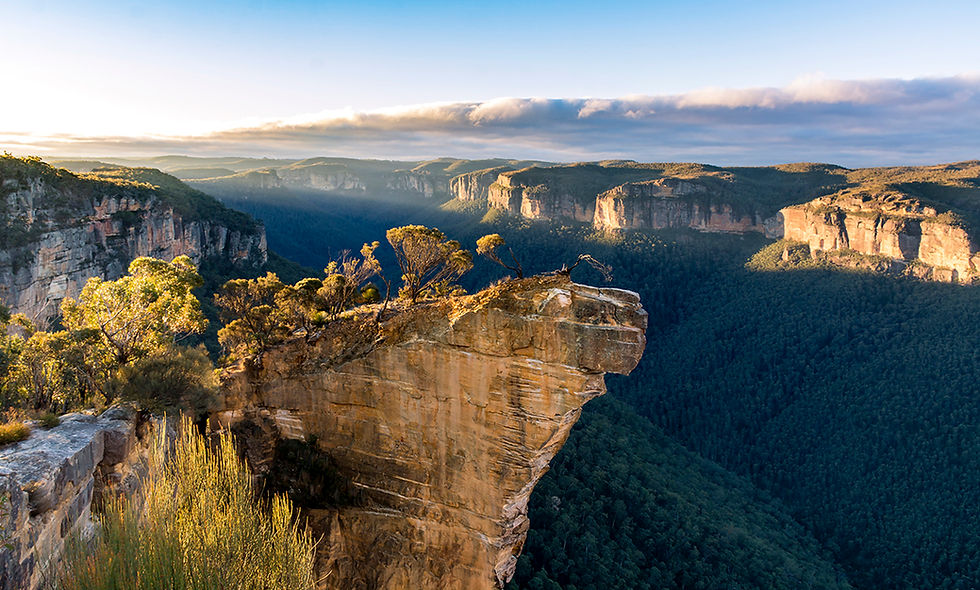
Hanging Rock Lookout, Blue Mountains, Australia. Photographer: RugliG | iStock.
Fatigue plays a role in many hiking incidents, particularly late in the day or during descents. What are the warning signs solo hikers should pay attention to before tiredness starts affecting judgement?
The biggest one is when simple things start feeling mentally hard. You stop checking maps properly, stop paying attention to footing, or start taking shortcuts with decisions. Physically, I think people should watch for sloppy foot placement, heavy breathing, particularly at higher altitudes, tripping more often, heavy legs on descents, dehydration headaches, or just feeling mentally flat. Descending is actually where I’ve felt the most fatigue on long hikes because our concentration drops a bit once we think the hard part is over.
“Descending is actually where I’ve felt the most fatigue on long hikes because our concentration drops a bit once we think the hard part is over.”
Nutrition is another huge one. I’ve seen plenty of fit people completely unravel simply because they are under-fuelled. Once energy drops too low, your judgement goes with it. The earlier you recognise those signs and take a proper break, eat, hydrate, or even stop for the day, the better. I think energy needs are often overlooked in hiking because it’s so hard to carry enough food (especially for multi day trips) while keeping their pack reasonably light. I often pack sugar and lollies in case I need a quick hit when I’ve been at it for a while.
Preparation for a solo hike often begins with choosing the right gear. From an endurance coaching perspective, what kind of physical preparation genuinely makes a difference before attempting longer or more demanding hikes?
Gear obviously matters, but fitness and durability matter just as much. The biggest thing people underestimate is time on our feet. You don’t need to be an elite athlete, but your body needs to be comfortable moving for hours while carrying load and dealing with uneven terrain.
Simple things like regular walking, stair climbing, hiking with a backpack, and building general aerobic fitness go a really long way. Strength work makes a huge difference, especially calves, glutes, quads and core. Downhill durability is probably the biggest thing people overlook. A lot of soreness and injuries happen from long descents rather than climbing. When I was training for my Swiss hike, I was in the gym four times a week, focusing on descending movements and making my legs bulletproof. I was running around five times per week and hiking two to three times a week with my weighted pack.
I also think people should practise hiking while fatigued or in less-than-perfect conditions before big trips … not dangerous conditions obviously, but enough to get used to managing yourself when things aren’t ideal. I would often do a long run Saturday of 20km, then into a long hike Sunday of 20km with a lot of hills to practise for the demands of the back-to-back days in the Swiss Alps.

Lauterbrunnen is famous for its towering sheer cliffs, traditional Swiss chalets, and 72 roaring waterfalls. It is anchored by the breathtaking 300 metre high Staubbach Falls and serves as a gateway to the Swiss Alps. Photographer: DaLiu | iStock.
Much of your background is in endurance sport, but many solo travellers approach hiking more casually or recreationally. What advice would you give to people who are not elite athletes but still want to hike safely and confidently on their own?
Being fit definitely helps, but hiking uses a different kind of fitness. I’ve seen runners and gym-fit people struggle because they underestimate terrain or simply how long they’ll be out there. My advice would be to respect the environment, start conservatively, and build experience gradually. Don’t let fitness trick you into skipping preparation. Understand weather forecasts, carry more water and food than you think you need, and always tell someone your plans. Confidence comes from experience, not from trying to do the hardest route possible straight away.
“Confidence comes from experience, not from trying to do the hardest route possible straight away.”
Solo hiking can be one of the best ways to reset mentally and gain perspective on where you are in life. There’s something pretty special about being out there with no distractions, especially in places like the Blue Mountains or the Swiss Alps where the scale of everything makes you slow down a bit. You also have very little phone reception which helps you fully unwind from social media and work.
Hiking is great for everyone, but there are different routes for different hikers. Never underestimate the mountains and show them the respect they deserve.