
THE SOLO TRAVELLER
Your world. Your way.
Slow Travel

The Ring of Kerry is a 179km (111-mile) circular driving route in southwestern Ireland, traversing the rugged coastline and mountainous landscapes of the Iveragh Peninsula in County Kerry. Photographer: Firina.
Rediscovering distance
Geoffrey Williams in conversation with Yvan Lefranc-Morin
Briefly …
Coach travel offers solo travellers the opportunity to move and connect slowly and rediscover the gems along the way. In the company of Yvan Lefranc-Morin, an industry insider and experienced solo traveller, we explore why coaches remain one of the most generous ways to see Australia and beyond.
Coach travel has a quiet, unglamorous charm that in the age of taking the shortest and quickest route, often goes unnoticed and under-appreciated. It’s the long, often indirect way through landscapes rather than over the top of them, and a chance to watch towns thin into fields and fields gather themselves back into towns and eventually cities again. For solo travellers, the comfort of coach travel offers room to contemplate, read, rest, or simply stare out the window at the ever-changing views.
Often rejected as a transport/transit option for ‘taking too long when there are faster options’ or ‘stopping too many times along the way’, travelling by coach brings a different feeling of what it means to experience the act of travelling, as opposed to the concept. And this is about ‘distance’ and appreciating that the distances we travel aren’t just a number on a map or a figure on a ticket, they can actually be the foundation of the journey.
Distance represents the opportunity to relax our expectations and the habit of flustered, hurried airport arrivals. The longer the distance, the more space there is for anticipation, doubt, restlessness, and resolve to take turns at the wheel. Distance gives travel its depth, which can often be ignored at the expense of speed and efficiency, and also gives us the opportunity to discover any number of little unknown gems along the way.
Yvan Lefranc-Morin, the Senior Managing Director for FlixBus Australia, first encountered long-distance coach travel the way many Australians did – alone, somewhere in Europe, moving slowly between cities with time to spare and curiosity to burn. “I am French, and like so many French people I first read about adventure by reading ‘Le Petit Prince’ (The Little Prince) by Antoine de Saint-Exupéry. A poet, writer, journalist and aviator, his love of adventure and travel transports you when you read his work.” Years later, that early understanding still shapes how he thinks about travel.
“Most people have the wrong idea about coach travel, but if you have the time and a smaller budget, it is one of the most competitive ways to get the most out of your trip. ‘Bucket list’ travel, where you try to tick every box and see everything, can feel rushed and wasteful. Slow solo travel is a far better way to savour the journey as well as the destination.”

“‘Bucket list’ travel, where you try to tick every box and see everything, can feel rushed and wasteful. Slow solo travel is a far better way to savour the journey as well as the destination.”
Yvan Lefranc-Morin joined FlixBus in 2015 to lead market growth across France and Benelux and took over 50 FlixBus trips solo travelling for work. Image courtesy FlixBus.
%20and%20Canberra%20Local%20Bus%20Operators%20Alysson%20and%20Brenton%20.jpg)
Yvan Lefranc-Morin (third from left), and Canberra Local bus operators Alyson and Brenton Deane, with FlixBus Australia Business Development Manager Sam Cooke (far right). Photograph: Makker Studio.
Coach travel, Yvan believes, is often misunderstood. Distance is something to be crossed quickly, efficiently, and with as little friction as possible. But to travel by coach is to experience distance differently, not as an obstacle, but as part of the story. Towns unfold gradually, landscapes alter the hectic pace, and the journey ultimately earns its place equally alongside the destination. For solo travellers, this matters. Travelling alone can occasionally feel isolating, but coaches offer a self-contained, reassuring way to move independently, with comfort in knowing you’re part of a moving community, without the obligation to perform it.
“Coach travel lets you keep your independence while still sharing the road with others – it’s the best of both worlds,” Yvan tells us. He’s seen what he calls “co-travelling” time and again – parents travelling alone with children, first-time solo travellers testing their confidence, older travellers discovering that long journeys don’t have to be daunting. Often, what stays with people isn’t just where they went, but the conversations, views, and small moments that happened along the way.
“The essence of FlixBus is the experience of respecting the very nature of travel itself – empowering more people to journey and admire the world without harming it. And that aligns perfectly with the spirit of solo adventuring. Slow solo travel is the reward in itself – the views are better, the pace more mindful, and the stories come not just from where you arrive, but from how you got there.”
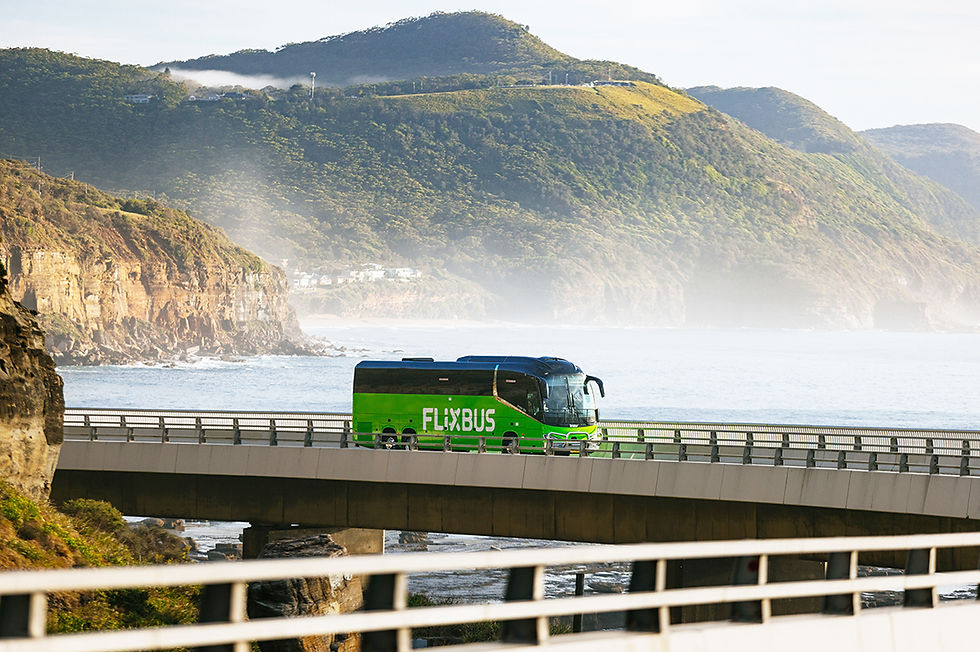
FlixBus launched in Australia in November 2025, now connecting Melbourne, Canberra, Sydney, Brisbane and Cairns. Photograph: Makker Studio.
There’s nostalgia in it too. Many Australians first experienced coach travel while backpacking solo through Europe, journeys that felt formative, even transformative, and bringing that style of travel back home reconnects with a slower, more deliberate way of experiencing our journeys from the ground up.
“Coach travel has quietly evolved. Today’s buses offer more than just a cheap seat from A to B. What hasn’t changed is the beauty of slow, sustainable, and affordable travel. In a country where flying is the default, ground travel deserves a rethink. For solo travellers in particular, coach routes offer a budget-friendly, comfortable way to explore.”
Modern coaches may be more comfortable and connected than they once were, but Yvan is clear that this isn’t the point. The real value lies in what coach travel asks of you, which is patience, openness, a willingness to let the road shape the experience. For solo travellers with time and intention, it remains one of the most generous ways to travel.
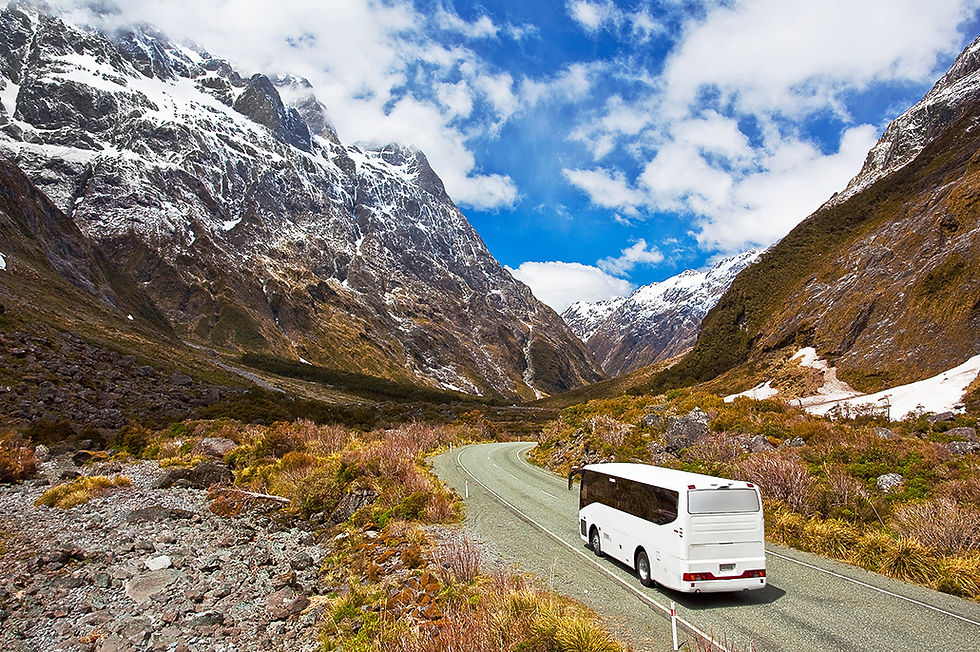
Travelling from Milford Sound to Te Anau, New Zealand. Photographer: Carl Quick.
“Working at FlixBus, we consistently hear incredible and inspiring stories of solo travel. One of my colleagues once travelled solo as a parent from Croatia to Munich with his five-year-old daughter. He described it as a truly transformational experience for both of them, and one his daughter still remembers fondly. More recently, another colleague welcomed his mother to Australia. They planned to meet in Airlie Beach, but she had never travelled alone before. She flew across the world on her own, then boarded a coach from Cairns to Airlie Beach. Understandably, he confided they were nervous that she might not enjoy the journey. But she did. In fact, she loved it. What she appreciated most was the chance to chat to strangers along the way, and to relax while watching her favourite French TV show!”
Yvan’s top 3 tips for solo travelling success …
1. Book your seat like you would on a plane. Unlike planes, you can book the seat next to you for a very low cost and having that extra space can make a big difference.
2. Arrive early at the station, and pack snacks and refreshments for the road. On Flix, you can bring your own selection of soft drinks and snacks onboard.
3. Swap out a hotel night for an overnight trip. Friday evening flights are the surest way to ruin a trip – arriving late at the hotel (still needing a hotel night), and if the flight is delayed, you arrive in the early hours of the morning. Not the best way to start a holiday or long weekend. Not to mention, you’ve had to pay for an extra night of accommodation. Instead, one of the best travel hacks is to replace that extra night of accommodation with travel time. For instance, our Sydney to Brisbane service (which stops in Byron Bay), departs at 7.20pm. You’ll arrive in Brisbane at 9am, ready to kick off your day of exploring, having saved on plane fares and night accommodation.