
THE SOLO TRAVELLER
Your world. Your way.
Ecotravel
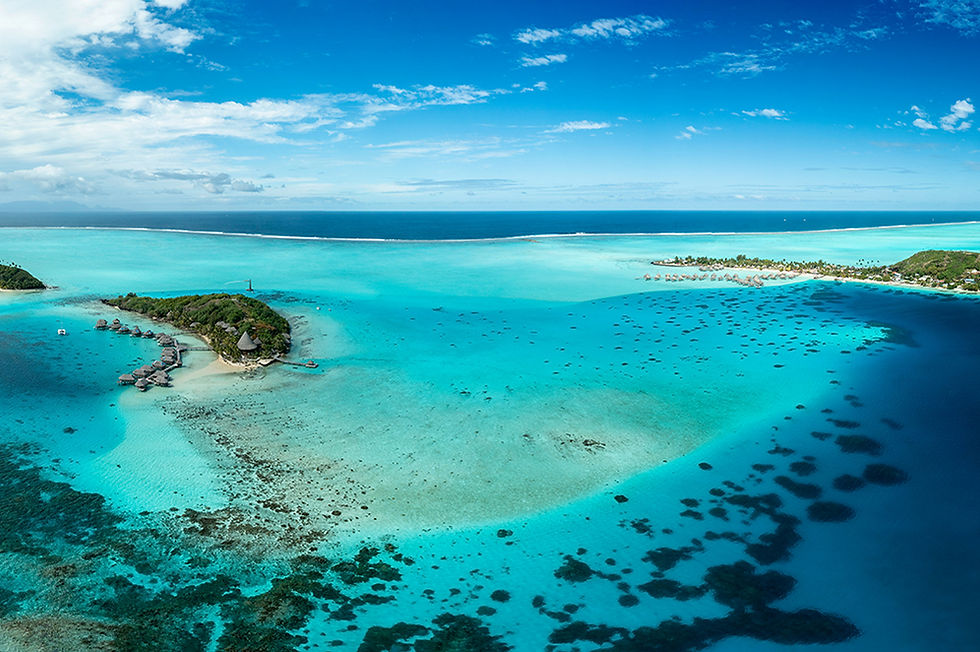
Bora Bora, French Polynesia. Photographer: Fabien Bellanger | Unsplash.
The ocean comes first
By Tiffany West
Briefly …
French Polynesia has created the world’s largest marine protected area, placing nearly five million square kilometres of ocean under protection in a move that links conservation, culture, and the future of tourism in the Pacific.
French Polynesia has drawn a line around nearly five million square kilometres of ocean and declared that conservation, not extraction, will shape its future. The marine protected area, known as Tainui Atea, is now the largest of its kind in the world, covering almost the entirety of French Polynesia’s territorial waters in the South Pacific.
French Polynesia is made up of 118 islands and atolls scattered across a vast area of the South Pacific Ocean. Although often associated simply with Tahiti, the territory stretches across five main island groups – including the Society Islands, Tuamotu Archipelago, Marquesas Islands, Austral Islands and Gambier Islands. The capital is Papeete on the island of Tahiti, which is the political and tourism hub of the territory. French and Tahitian are widely spoken, and while French Polynesia governs many of its own internal affairs, it remains linked politically to France.
For many travellers, French Polynesia is synonymous with turquoise lagoons, volcanic peaks and overwater bungalows, particularly around islands such as Bora Bora and Moorea. But beyond the luxury imagery, it is also a region with deep Polynesian cultural traditions, strong connections to the ocean, and enormous marine territory spread across an area of ocean roughly comparable in size to Europe.

Bora Bora, in French Polynesia’s Society Islands in the South Pacific, is known for its turquoise lagoon, coral reefs, and iconic overwater bungalows. Photographer: Tom Donders | Unsplash.
At a time when many island nations are grappling with rising sea temperatures, coral bleaching, shifting fish stocks and increasing pressure from industrial activity, French Polynesia’s approach is deliberately expansive. The measures include a ban on seabed exploitation and drifting fish aggregation devices (FADs), while also establishing zones reserved for traditional and artisanal fishing.
Think of drifting FADs as floating fish magnets. Commercial fishing operators place them in the open ocean because fish such as tuna naturally gather beneath floating objects for shade and protection, and over time, large schools can build up underneath them. The devices are fitted with buoys and GPS tracking equipment, allowing fishing vessels to later return and encircle the entire aggregation with enormous nets. The concern is not simply the catching of tuna itself, but what is known as ‘bycatch’ – the unintentional capture of non-target marine species. Environmental groups and marine scientists have long criticised drifting FADs because they can contribute to high levels of bycatch, including sharks, turtles and juvenile fish species.
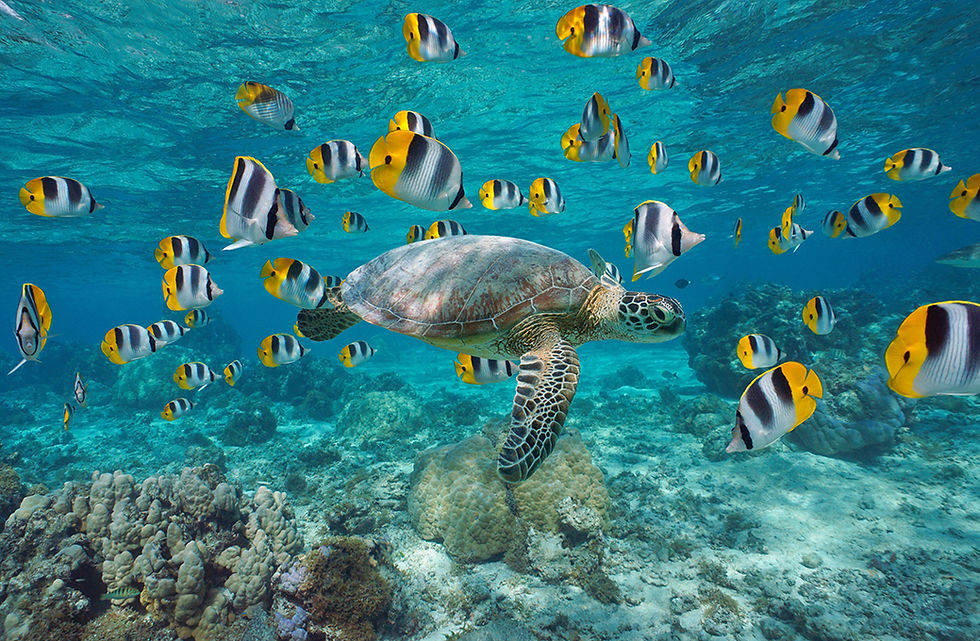
A green sea turtle with a school of tropical butterflyfish swimming in one of the lagoons of Bora Bora, French Polynesia. Photographer: Damocean | iStock.

Spotted Eagle Rays swimming in the Bora Bora lagoon, French Polynesia. Photographer: Eqroy | AdobeStock.
The scale of French Polynesia’s new marine protected area is difficult to comprehend. Spanning close to five million square kilometres, Tainui Atea protects waters that support extraordinary biodiversity, including coral reefs, stingrays, sharks, whales, sea turtles and more than a thousand species of fish. French Polynesia’s marine ecosystems are regarded as among the richest in the Pacific, with conservation groups noting the importance of the region not only for biodiversity, but also for the livelihoods and cultural continuity of island communities.

A stingray in the waters off Moʻorea-Maiʻao, French Polynesia. Photographer: Corentin Largeron | Unsplash.
But the announcement also reflects something deeper than environmental policy alone. In French Polynesia, the ocean is not viewed simply as scenery or resource. It is central to identity, movement, food systems, oral traditions and everyday life. The concept of rāhui – the traditional Polynesian practice of restricting access to areas or resources to allow regeneration – sits beneath many contemporary conservation discussions across the Pacific.
The declaration also places French Polynesia into a growing global conversation about marine protection. With global targets aiming to protect 30 per cent of the world’s oceans by 2030, large-scale marine protected areas have become increasingly significant in that effort, particularly among Pacific island nations whose territories include vast ocean regions despite relatively small land populations.
Yet protection on paper is only the beginning. Enforcement across remote ocean territory remains enormously complex and expensive, especially for smaller island states with limited resources. Still, the symbolism matters. In an era when many tourism destinations continue to market untouched nature while struggling to protect it, French Polynesia is attempting something more direct by placing conservation at the centre of how it imagines its future. Ultimately, Tainui Atea represents a striking statement from a region whose relationship with the ocean has always been measured in far more than economics.
Tiffany West is The Solo Traveller’s Editorial and Pictorial Assistant Lead.