
THE SOLO TRAVELLER
Your world. Your way.
2027/2028
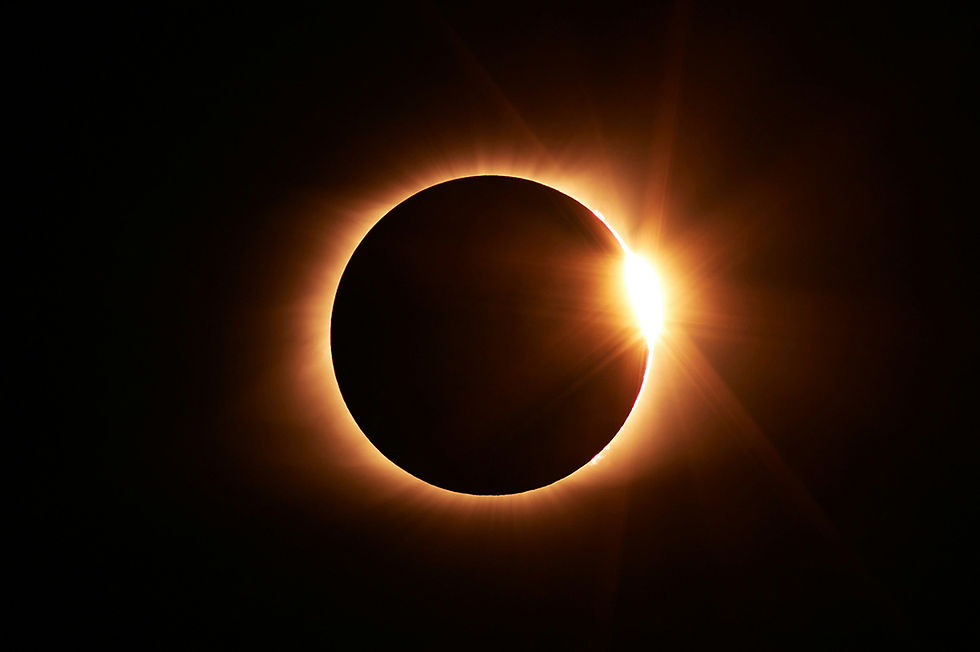
The total solar eclipse of 21 August 2017, photographed near Cerulean, Kentucky, USA, where totality lasted approximately two minutes and 40 seconds. Photographer: Jongsun Lee | Unsplash.
Six minutes worth travelling for
By Michael Webster
Briefly …
On 2 August 2027, a total solar eclipse will sweep across southern Europe, North Africa and the Middle East, offering travellers an extraordinary reason to plan ahead. For those prepared to follow the Moon’s shadow, the reward could be six minutes beneath a darkened midday sky.
There are journeys we take to discover somewhere new, and others we plan around an experience that cannot be moved, rescheduled or repeated on demand. On 2 August 2027, travellers across a narrow corridor stretching from the Atlantic Ocean to the Indian Ocean will have an opportunity to witness one of nature’s most remarkable spectacles – a total solar eclipse lasting more than six minutes at its longest point.
For a few extraordinary moments, the Moon will pass directly between Earth and the Sun, blocking the Sun’s brilliant surface and revealing its outer atmosphere, the corona. Daylight will fade, temperatures may fall, and stars and planets could become visible in the darkened sky. Then, almost as quickly as it arrived, daylight will return.
The event is already attracting considerable attention from astronomers, specialist tour operators and travellers planning their journeys well in advance. And with good reason. The 2027 eclipse will be the second-longest total solar eclipse of the 21st century, with a maximum duration of approximately six minutes and 23 seconds. According to NASA, only the eclipse of 22 July 2009, which lasted approximately six minutes and 39 seconds, was longer.
The path of totality begins over the Atlantic Ocean before reaching southern Spain and Morocco. From there, the Moon’s shadow will travel across Algeria, Tunisia, Libya and Egypt, continuing over the Red Sea into Saudi Arabia, Yemen and Somalia before disappearing over the Indian Ocean.
For travellers, the appeal extends well beyond the eclipse itself. The path crosses some of the world’s most compelling destinations, offering opportunities to build an entire journey around an experience that will last only minutes. Southern Spain offers one of the most accessible options. The eclipse will cross parts of Andalusia, including Cádiz, Málaga and the southern coastline near Tarifa. At the southernmost point of mainland Europe, Tarifa is expected to experience approximately four minutes and 39 seconds of totality, with the Strait of Gibraltar and the North African coast providing a remarkable geographical setting.
Across the strait, northern Morocco offers another perspective. Tangier and Tétouan lie within the path of totality, making it possible to combine the eclipse with time exploring Morocco’s northern cities, coastal landscapes and cultural heritage. The experience could become one part of a longer independent journey rather than the sole reason for travelling.

Tangier, Morocco. Photographer: Linda Gerbec | Unsplash.
Farther east, Tunisia presents another possibility, with parts of the country expected to experience more than five minutes of totality. Its Mediterranean coastline, archaeological sites and inland landscapes offer opportunities for travellers interested in extending their stay beyond eclipse day.
Egypt, however, is attracting particular attention. Near Luxor, the Moon’s shadow will produce some of the longest periods of totality anywhere along the eclipse path. The prospect of witnessing the Sun disappear above the Nile Valley, surrounded by monuments that have stood for thousands of years, has an appeal extending far beyond astronomy.

The Karnak Temple Complex comprises a vast mix of temples, pylons, chapels, and ancillary buildings. Luxor, Egypt. Photography: Zbg2 | Unsplash.
The timing also brings practical challenges. August is one of the hottest months in Upper Egypt, where daytime temperatures can be extreme. Travellers considering Luxor or other locations along the Nile will need to account for heat exposure, suitable accommodation, reliable transport and access to an appropriate viewing location. Clear skies are another consideration. Although historical weather patterns favour parts of Egypt and North Africa, no destination can guarantee an unobstructed view. Coastal cloud, haze and airborne dust can affect visibility, while conditions on the day may differ considerably from seasonal averages.
For independent travellers, choosing where to witness the eclipse involves more than selecting a destination on a map. Totality is visible only within a relatively narrow corridor, and even nearby locations can experience substantially different durations. A destination outside that corridor may see an impressive partial eclipse, but not the complete disappearance of the Sun. Specialist eclipse journeys can simplify some of these arrangements, particularly where transport, viewing locations and local conditions require careful coordination. Travelling independently offers greater freedom to develop a wider itinerary, although accommodation availability, local infrastructure and the possibility of increased visitor numbers deserve early consideration.
Safe viewing is essential. Certified solar eclipse glasses or suitable solar filters are required whenever any part of the Sun’s bright surface remains visible. Only during the brief period of complete totality, and only for observers within the path of totality, is it safe to look directly at the eclipsed Sun without protection. Ordinary sunglasses are not sufficient.
There is, of course, no guarantee that the weather will cooperate. Travellers may spend months planning, travel thousands of kilometres and still find clouds obscuring the moment they came to witness. It is one reason to choose a destination that offers experiences worth making the journey for, regardless of what happens overhead. But perhaps that uncertainty is part of the appeal. A total solar eclipse cannot be extended or postponed, and the experience is shared by everyone standing beneath the same passing shadow. Whether witnessed independently or alongside a group of fellow travellers, it offers a rare opportunity to be somewhere extraordinary at precisely the appointed moment.
For anyone considering a journey in 2027, the question is no longer simply where to go. It is whether six minutes beneath a darkened sky could be worth planning an entire adventure around.
Ready to start planning your eclipse journey? Bookmark the US National Solar Observatory’s interactive Total Solar Eclipse Map and find your place beneath the Moon’s shadow.
Editor’s note: The current security situation across parts of North Africa and the Middle East adds an important consideration. Ongoing conflicts and regional instability have prompted government travel warnings for several countries along the eclipse path, with conditions capable of changing rapidly. Travellers considering these destinations should check the latest advice via The Solo Traveller’s list of official travel advisory websites before making arrangements and understand how government warnings may affect travel insurance and cancellation arrangements.
22 October 2026 at 10:55:08 pm