
THE SOLO TRAVELLER
Your world. Your way.
The Alcohol Divide – A Health and Wellbeing Series

Aaron Milne, Winemaker for Edenvale Wines and General Manager of Low and No Beverages. Image courtesy Edenvale.
Wine without the certainty
A Q&A with Aaron Milne, Winemaker for Edenvale Wines and General Manager of Low and No Beverages.
Briefly …
Aaron has spent more than a decade working in dealcoholised wine. He is one of a very small number of people globally who has built and operated advanced dealcoholisation systems, giving him a rare perspective on the technical, commercial, and cultural realities shaping the future of no- or low-alcohol wines.
Aaron Milne grew up in Sunraysia in north-west Victoria, Australia, and has spent more than a decade working in dealcoholised wine. He is currently a winemaker for Edenvale dealcoholised wines, while also being the General Manager of his own dealcoholisation processing company, Low and No Beverages. Aaron is not just producing no- or low-alcohol (NOLO) wine but is one of a very small handful of people globally who has actually built and operates advanced dealcoholisation systems.
Aaron speaks about NOLO wine with the realism of someone working inside the technical and commercial realities of the industry. He doesn’t see NOLO wine as a replacement for traditional wine, but it is one of the few areas where real experimentation is happening, particularly as producers move away from sweet styles towards something drier and more structurally credible.

Aaron is one of a very small handful of people globally who has actually built and operates advanced dealcoholisation systems. Image courtesy Edenvale.
You’ve spent more than a decade working in dealcoholised wine. What first drew you into that space, particularly at a time when it wasn’t widely taken seriously?
It all started with curiosity and a bit of adventure. I was offered the opportunity to learn and eventually take over a facility producing a range of “non-traditional” wine and grape products, including dealcoholised wine. At the time, it felt like something quite different and a bit of fun, and that sense of novelty is what initially drew me in. Over time, as consumer attitudes have shifted and the quality of the category has significantly improved, what began as curiosity developed into a genuine passion. I’ve stayed in the space ever since because it has evolved into a proper craft in its own right, with real momentum and continual improvement behind it.
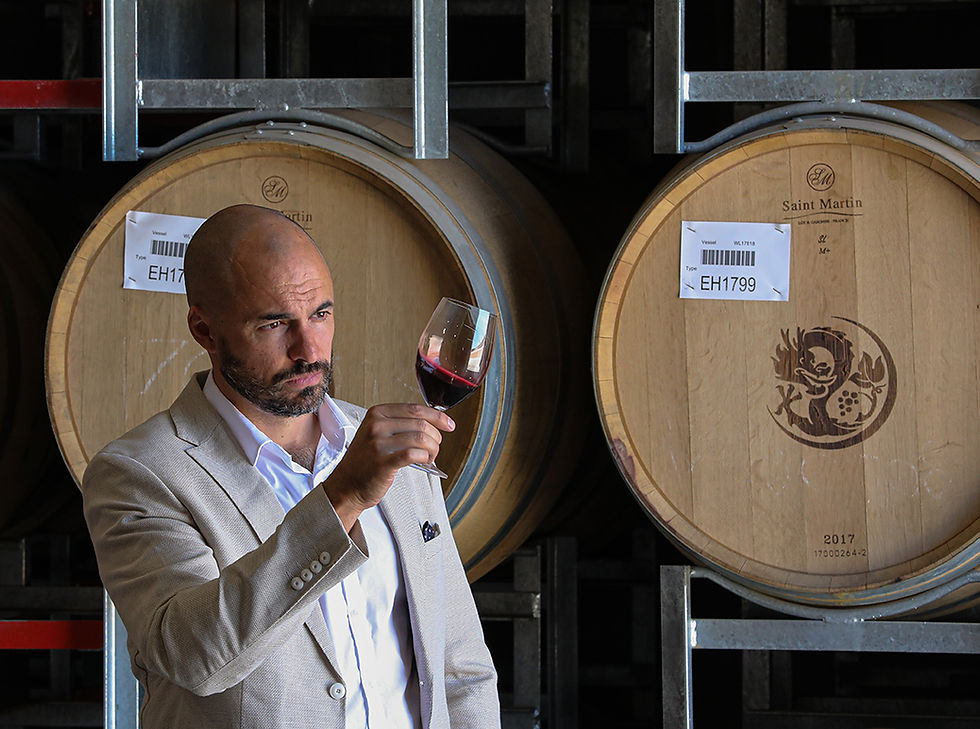
Over time, as the quality and results speak for themselves, perceptions tend to evolve with it. Image courtesy Edenvale.
From a winemaker’s perspective, what is the biggest challenge in removing alcohol while still retaining structure, balance, and identity?
The biggest challenge is replacing what alcohol contributes to the wine. Alcohol feels sweet, hot and heavy on the palate, so once it’s removed you can be left with something that feels quite hollow unless that structure is carefully rebuilt. The process often starts with thinking about weight and sweetness, so the final product still has identity and cohesion rather than feeling like something is missing.
You’ve described the shift away from sweeter styles towards something more structurally credible. What’s driving that change?
The shift is really being driven by a more sophisticated NOLO wine market and a change in who’s drinking dealcoholised wine. This is why we’re venturing into the higher quality, regional wines, designed to go with food or a dining experience. We’re no longer just catering to people looking for something sweet or simple. We’re increasingly seeing wine drinkers come across and we need to offer them something a little more serious. At the same time, technology and techniques are now delivering in this area too, where we feel we do get the ‘bang for our buck’ when we step up to the next level in fruit price and wine quality.
“We’re increasingly seeing wine drinkers come across and we need to offer them something a little more serious.”
Do you think perceptions of NOLO wines are starting to shift within the industry itself, or is there still resistance?
There’s still plenty of resistance within parts of the industry, particularly from those who are very traditional in their view of what wine “should” be. However, it is slowly reducing as the category proves itself. From our perspective, we’re simply focused on trying to deliver the best product we can and meet the market where it’s at. Over time, as the quality and results speak for themselves, perceptions tend to evolve with it.
Is this evolution being driven more by consumer demand or by innovation within winemaking?
A little of both. We’re still testing and developing in this area, and it is very expensive with high minimum volume runs on a new wine. Producing products in this range remains an investment, not just financially, but in research and development, passion and adventure. You wouldn’t do it to make money at this stage! But we believe in where this category is heading and being part of shaping it early feels worthwhile.

Producing products in this range remains an investment, not just financially, but in research and development, passion and adventure. Image courtesy Edenvale.
For someone visiting a winery without drinking alcohol, how different is the experience today compared to, say, five or ten years ago?
It’s a tough scenario for wineries to cater for, for obvious reasons, but many are now starting to embrace the shift and see it as an opportunity to welcome visitors who might otherwise have avoided the experience altogether. While some research is still needed from the visitor, the landscape has definitely improved, and it’s now much more realistic to visit and enjoy a wine region without necessarily drinking wine.
Do you see wineries genuinely embracing non-alcoholic options as part of the experience, or are many still treating them as an afterthought?
Interest in this space is definitely increasing, we’re seeing more curiosity from producers and consumers than ever before. But it is important to be honest how challenging and expensive it is to produce a zero option. The technical process is complex, the equipment required is specialised, and the costs involved are significant. For many smaller producers, a NOLO option can seem out of reach. So when you see resistance from winemakers in this area, it’s worth understanding where that’s coming from, it’s tough out there.
You operate your own dealcoholisation systems. Does being so close to the process change how you think about what “wine” actually is?
Absolutely, from a technical perspective, you really notice all the ways alcohol interacts within a wine. I won’t bore you with that, but in a ‘bigger picture’ way, it makes regular wine more special. The way wine and grapes have been developed through ancient history to create this kind of perfect beverage, particularly when it comes to food pairing. When you pull the alcohol out and try to recreate it, you really appreciate how important it is.

From left: Aaron, Michael Bright, Founder of Edenvale, and Peter Bright, Winemaker at Edenvale. Image courtesy Edenvale.
Is there a risk that low and no alcohol wines are judged against socially and culturally embedded standards, rather than being appreciated on their own terms?
Yes, definitely. Interestingly though, the stigma tends to come more from the gatekeepers than from consumers themselves. By ‘gatekeepers’, I mean the industry stakeholders who have very fixed and understandable ideas about what wine is and what it should be. Consumers are generally more open-minded and are aware of the differences between NOLO wines and traditional wines. What they are looking for is something that feels considered and appropriate for the moment, something that elevates their meal or their experience in a way that a sparkling water or a soft drink simply can't.
Do you see a point where non-drinkers can walk into most wineries and feel just as catered for as those who are tasting wine?
I’d like to say “Yes”, and while I admire the ambition behind the question, it’s very hard to imagine that becoming a widespread reality anytime soon. There would need to be a big, low-cost, technological change for that to occur. In the current landscape, the more realistic and achievable goal for most wineries would be to have at least one considered, well-made NOLO option available.