
THE SOLO TRAVELLER
Your world. Your way.
Health and Wellbeing

Briar heading to Bali from Perth International Airport.
Life on the other side of fear
A Q&A with Briar Kirkby, Founder of Briar Loves Bali Retreats.
Briefly …
The day after finishing cancer treatment, Briar Kirkby boarded a plane to Bali alone. In this deeply personal conversation, she reflects on travelling while still healing, confronting illness and loneliness away from home, and how solo travel helped her begin rebuilding a life that no longer revolved around survival alone.
The day after finishing cancer treatment, Briar Kirkby boarded a plane to Bali alone. There was no carefully planned celebration waiting at the other end, no checklist of attractions to conquer, and no urgency to ‘bounce back’ into normal life. What she needed instead was distance, space and the chance to sit with everything she had just endured. Travelling solo in her late 50s while still physically and emotionally recovering became less about escape and more about understanding who she was after illness had changed the shape of her life.
What began as a personal turning point gradually evolved into something much larger. Alone in Bali, away from familiar expectations and routines, Briar realised she did not want to simply return to the version of life she had before cancer. The experience reshaped the way she thought about healing, independence and what meaningful change can look like after a major life event. Today, she creates retreats for women in Bali designed around the same sense of space, reflection and reconnection that helped her begin rebuilding her own life.
When you chose to leave for Bali the day after finishing treatment, what was happening in your mind at that moment, and why did going alone feel like the right decision?
I didn’t feel safe staying in Australia. That probably sounds strange, but it’s the truth. There’s something about Bali that feels like a reset for me. The energy, the grounding, the way my mind finally settled. If I had to describe it, I’d say Bali holds a kind of heartbeat that I can actually feel in my body. I knew I could rest there in a way I couldn’t at home. The villa staff would take care of everything. I wouldn’t have to be ‘on’ all the time or hold everything together. I could sleep, cry, fall apart a little if I needed to, and slowly put myself back together surrounded by kind, gentle people. So I jumped on a plane the next day. Some friends joined me there at different points, but initially it was something I needed to do for myself.
When you arrived, still physically and emotionally recovering, what did solo travel actually feel like in those first few days?
Honestly? It was bloody scary. I got on that plane when I could barely breathe properly. My throat was bleeding, I couldn’t swallow, and the only thing I could manage was Coke No Sugar, of all things! But underneath all of that there was something stronger. A very clear, very loud voice telling me, “You are not done yet!”.
Once I arrived, everything slowed down. There were moments when I felt incredibly fragile, but also strangely peaceful. I’ve always had this deep instinct to live a better life, not just survive, but actually live well. And somehow that instinct carried me when my body couldn’t. It wasn’t brave in a glamorous way. It was messy, uncomfortable and uncertain. But I went anyway.
“It wasn’t brave in a glamorous way. It was messy, uncomfortable and uncertain. But I went anyway.”
How did your body inform the way you moved through that experience?
I couldn't go far. Breathing was a huge issue, plus I had no energy and was petrified that I would collapse on the street and wouldn’t be able to get back to the villa. Healing is slow and there is no way to rush that process! I had days I could walk to the bathroom, shower, get dressed and feel good, then other days I couldn’t even crawl to the bathroom. Even walking slowly through Seminyak felt like a huge achievement some days.
It is a very silent kind of recovery. People can’t always see how unwell you still are, and that can feel incredibly isolating. Rather than fighting my body, I slowly started to listen to it. When I was tired, I slept, when I was sad, I cried. I went from being that person who pushed through the pain and did whatever needed to be done, even when I was exhausted and unwell. Suddenly I was learning to stop, rest and let myself recover without guilt. My body had been sending me messages for years. I finally started listening.
“Suddenly I was learning to stop, rest and let myself recover without guilt. My body had been sending me messages for years. I finally started listening.”
You’ve spoken about the confronting nature of being alone while unwell. What did that confrontation look like for you, and how did you move through it?
I didn’t tell many people how bad things were. Part of me genuinely believed I could handle it on my own. Like I had to be the strong one, the one who fixes everything. Looking back, it was incredibly lonely. There were moments where I truly felt like no one would notice if I disappeared. Your mind goes to strange places when you’re unwell and alone. It tells you stories that aren’t real, but they feel very real in the moment.
And then something shifted. When I finally let people in and told them what was really going on, the response shocked me. People cried. They said things like, “I don’t know what I would have done without you”. That stopped me, because I realised I was loved in ways I hadn’t allowed myself to see. And maybe I didn’t have to carry everything on my own.
“… I realised I was loved in ways I hadn’t allowed myself to see. And maybe I didn’t have to carry everything on my own.”
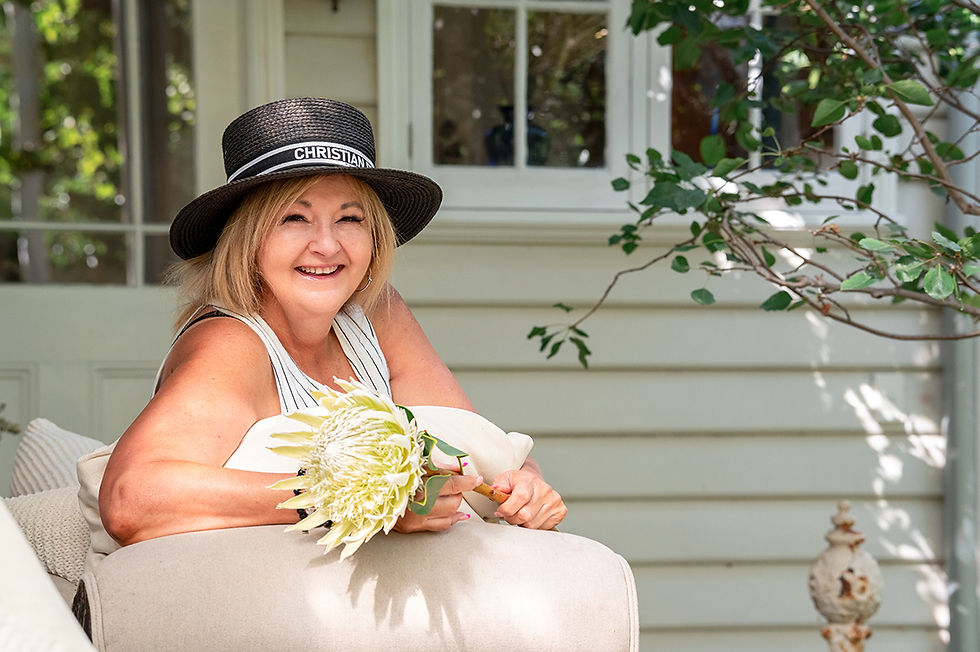
One year after my first PET (Positron Emission Tomography) scan clearance after throat cancer in 2024. Photographer: Kat M Photography.
In that space of stillness and distance from your everyday life, what began to shift in the way you saw your future?
Starting again wasn’t about doing more. It started with listening to my body. I remember speaking with a Balinese healer who talked about how the body sends messages and how often we ignore them. I had ignored mine for years. So I started paying attention. Simple things, really. If I was tired, I rested. If I was hungry, I ate. I stopped fighting myself all the time. I also stopped putting everyone else first. For the first time in a long time, I started asking what actually nourished me, not just physically, but emotionally too. Nature, movement, music, rest, quiet. I start with hot water, then ginger and lemongrass tea I learnt from a Balinese healer. I listen to frequency music. I spend time in spaces that feel calm and beautiful.
My days look different now. I protect my peace more carefully. When life feels overwhelming, I no longer push through at all costs. And when it all feels like too much? I retreat, rest, and listen to what my body needs. It’s no longer about proving anything. It’s about staying in alignment with myself.
“I protect my peace more carefully.”
Was there a particular moment in Bali when you realised you didn’t want to return to your old life as it was?
It was quiet. Not dramatic. I was lying on the couch reading a second-hand book I’d picked up called ‘Mrs Winterbottom Takes a Gap Year’ by Joanna Nell. A friend had come to visit and became sick. Normally, I would have jumped up, taken care of everything and fixed it all. But I couldn’t. So I asked for help. That moment, as small as it sounds, shifted something. In the stillness, I realised if I wanted to live, I had to live differently. I realised I had become so used to surviving that I’d forgotten how to simply be.
“I realised I had become so used to surviving that I’d forgotten how to simply be.”
I started writing little notes, blogs and thoughts about what needed to change. I began doing simple things I hadn’t done in years … having baths, listening to music, turning off the noise instead of pushing through it. It hit me that the life I had been living had led me here. And the only person who could change that … was me.

A baking class in Seminyak in 2025.
Solo travel often carries an assumption of independence and strength. How did your experience challenge or redefine that idea?
I think people often assume solo travellers are incredibly confident and independent, but honestly, that hasn’t always been my experience. I still don’t like flying. You would think after the number of flights I’ve taken over the past few years that fear would disappear, but it doesn’t. Every single trip challenges me. I have to be at the airport early, get checked in and calm myself down before boarding. My heart races, I go red in the face, and I still get nervous before take-off.
What solo travel has taught me though is that independence doesn’t mean fearlessness. It’s bravery. Brave enough to book the ticket. Brave enough to go alone with no one to hold your hand as the plane takes off. Brave enough to sit with your own thoughts, and brave enough to arrive somewhere unfamiliar and trust yourself enough to figure it out. I sometimes high five myself for simple things, like going to a cafe alone, reading a book on the beach, or starting a conversation with someone sitting nearby. For me, solo travel hasn’t been about looking fearless. It’s been about slowly building trust in myself.
“Brave enough to sit with your own thoughts, and brave enough to arrive somewhere unfamiliar and trust yourself enough to figure it out.”
For women navigating midlife, particularly after major life events, what is it about travelling alone that can open up a different kind of clarity?
I think travelling alone in midlife strips everything back. After divorce, illness, burnout, or years of putting everyone else first, you suddenly find yourself with space and silence, and that can be confronting at first. But it’s also where clarity begins. When you’re alone, away from routines and responsibilities, you start hearing yourself again. Your own thoughts, your own wants, your own intuition. Not who everyone needs you to be.
For me, Bali became that place. It gave me room to rest, heal, think, cry, breathe, and slowly reconnect with myself without all the noise of everyday life. I don’t think solo travel is really about ‘finding yourself’. I think it’s about remembering who you were before life got so heavy.
“I don’t think solo travel is really about ‘finding yourself’. I think it’s about remembering who you were before life got so heavy.”
Your retreats now offer solitude and connection. How do you balance those two, and why is that balance so important?
I think women need solitude and connection, especially in midlife. A lot of women come to my retreats exhausted from constantly giving to everyone else. The last thing they need is a schedule packed from morning until night where they feel like they have to perform, socialise, or ‘work on themselves’ every minute.
I’ve intentionally created the retreats to feel softer than that. There’s connection through beautiful dinners, workshops, shopping days, conversations by the pool, and shared experiences with like-minded women, but there’s also permission to step away and simply rest. If someone wants to sleep in, sit quietly with a tea, read a book, or have time alone after a massage, that’s completely okay too.
Some of the biggest shifts happen in those slower moments when women finally stop rushing and start listening to themselves again. I think that balance matters because most women in midlife aren’t looking for more noise. They’re looking for space to breathe.

Briar having dinner during her first Bali retreat in 2022.
Looking back, what would you say to someone who is standing at the edge of a similar decision – not just to travel, but to begin again?
You don’t have to have your whole life figured out before you begin again. Most women wait until they feel brave enough, healed enough, ready enough, but honestly, I don’t think that moment ever comes. Sometimes you just have to take the first step while your knees are still shaking. Trust me, I’ve been there, done that.
“Sometimes you just have to take the first step while your knees are still shaking.”
I think many women reach a point in midlife where they realise they’ve spent years surviving, being responsible, being needed, being ‘the strong one’, and somewhere along the way they stopped asking themselves what they actually wanted. Starting again is scary because it asks you to let go of the version of life you thought you were supposed to have. But it can also be incredibly freeing.
Life after heartbreak, illness, divorce, or loss can look very different, but different doesn’t always mean worse. Sometimes it becomes softer. More honest. More aligned. You stop living on autopilot and start choosing what genuinely brings you peace. And if I could say one thing to someone standing on the edge of that decision, it would be this: there is still so much life waiting for you on the other side of fear.
“… there is still so much life waiting for you on the other side of fear.”
For me, beginning again wasn’t one big dramatic moment. It was a series of small decisions that slowly brought me back to life. Booking the flight. Resting when my body needed it. Letting people care for me. Sitting with difficult emotions instead of running from them. Believing there could still be joy ahead of me, even when I couldn’t fully see it yet.
And yes, there were lifestyle changes too. I miss coffee and pork belly sometimes, but I’ve made peace with the fact that feeling healthy and fully alive matters more to me now than holding onto old habits that no longer serve me. Reinvention doesn’t have an age limit. Starting again can happen at any point in life, but it only begins once you decide to take the first step.
Briar now hosts small group retreats in Bali, offering women space to slow down, reconnect and step out of survival mode. You can connect with Briar via her website here https://briarlovesbali.com.au/ and on Instagram here