
THE SOLO TRAVELLER
Your world. Your way.
The Alcohol Divide – A Health and Wellbeing Series

Kyla Kirkpatrick – ‘The Champagne Dame’ and Founder of Emperor Champagne.
Champagne, celebration and choice
A Q&A with Kyla Kirkpatrick – ‘The Champagne Dame’ and Founder of Emperor Champagne
Briefly …
Champagne has long been associated with celebration, ritual and luxury, but changing attitudes towards alcohol are beginning to reshape that experience. Kyla Kirkpatrick – The Champagne Dame – shares her thoughts on moderation, inclusion, alcohol-free sparkling wines, and why the future of luxury may be less about excess and more about intention, atmosphere and participation.
After reading a series of books on the history of Champagne, Kyla fell in love with the story of Napoléon Bonaparte and his friendship with Jean Remy Moët. “I fell in love with Champagne itself,” Kyla tells us. “I wrote a letter to a gentleman who had written my favourite book on the subject, and he wrote back inviting me to visit France to learn all about Champagne.”
Quitting her finance career and buying a one-way ticket to Paris, Kyla’s “charmed new life of delicious Champagne, grand soirees, and luxury travel” began. “While living in France, I was lucky enough to be given a glimpse into the life of Champagne families where I shared wine and stories with generations of passionate winemakers, tasted some of the world’s most beautiful and rare Champagnes and studied the art of their unique existence. That’s when I followed my heart and committed myself to Champagne.”
Returning to Australia, Kyla became a Champagne Ambassador – widely recognised and celebrated as The Champagne Dame – hosting masterclasses, dinners, events and sharing stories from the most prestigious Champagne houses as well as the new boutique winemakers.
In 2017, Kyla founded Emperor Champagne, and she is proud to include ‘French Bloom’ in her range. Founded in Paris by long-time friends, Maggie Frerejean-Taittinger and Constance Jablonski, French Bloom was born from their realisation that non-alcoholic, festive and sophisticated drinks were non-existent. Described by British Vogue as “One of the best non-alcoholic drinks that actually tastes great”, French Bloom has won numerous awards, including World’s Best Alcohol-Free at the World Sparkling Wines Awards in 2022 and 2023, and a gold medal at the America Wine Awards in 2023.
“I don’t believe alcohol-free sparkling wines diminish Champagne culture at all”, Kyla says. “If anything, they expand it by allowing more people to participate in moments of beauty, ritual and celebration in a way that feels authentic to them. One of the most interesting shifts I’ve observed is that people are redefining luxury around wellbeing and conscious choice. For a long time, luxury was associated with abundance and excess. Today, true luxury is increasingly about intentional experiences, emotional connection and inclusivity.”
“Today, true luxury is increasingly about intentional experiences, emotional connection and inclusivity.”
You’ve spent years immersed in the world of Champagne. What first drew you to the region, and what has kept you there?
What first drew me to Champagne was the history of the region not the wine itself. Champagne – the destination – is connected with war, religion, the French Royal Court and there are so many wonderful stories to tell. The region itself has this extraordinary duality: immense luxury and glamour on one hand, but also deep agricultural tradition and family heritage on the other. What has kept me there is the endless depth of the category. Every house, every grower, every vintage reveals something new. Champagne is alive – culturally, historically and emotionally. I still feel that sense of discovery every time I return.
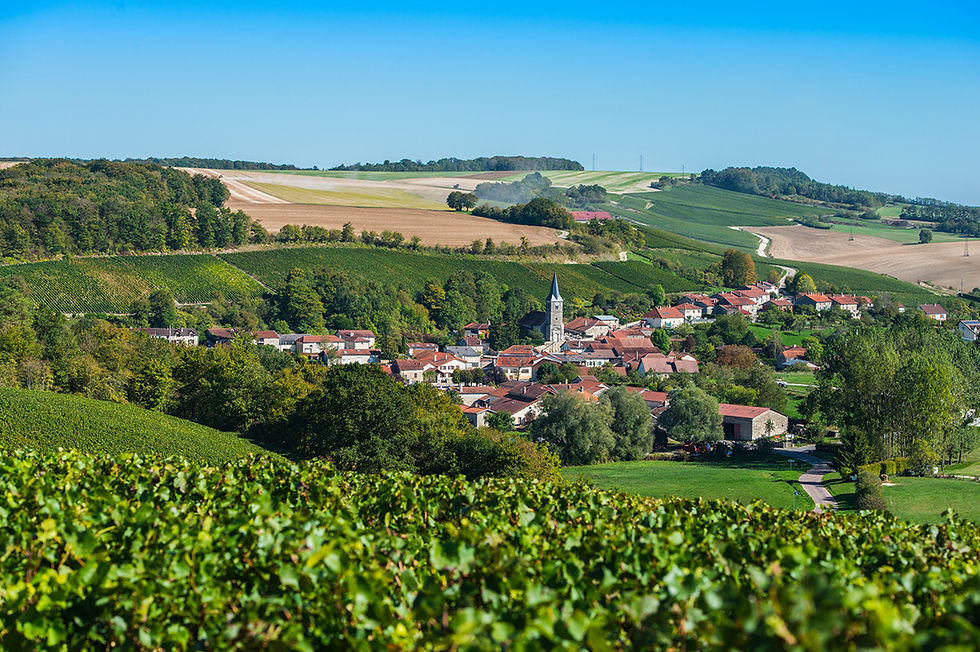
Champagne vineyards in the Cote des Bar, Champagne, France. Photographer: Esperanza33 | iStock.
Champagne carries a strong sense of ritual and tradition. How do you see alcohol-free expressions fitting into that world?
The ritual of Champagne has always been bigger than alcohol itself – the anticipation, the sound of the cork, the elegance of the glassware, the shared moment – those things still matter deeply. Alcohol-free expressions allow more people to participate in that ritual. Whether someone is choosing not to drink for health, lifestyle, pregnancy, religion or simply moderation, they still deserve to feel included in moments of celebration and sophistication. Luxury today is increasingly about inclusivity and intentionality, and I think that’s where alcohol-free sparkling wines are finding their place.
“Luxury today is increasingly about inclusivity and intentionality, and I think that’s where alcohol-free sparkling wines are finding their place.”
You’ve chosen to stock French Bloom alongside traditional Champagnes. What convinced you it belonged in that conversation?
French Bloom impressed me because it approached the non-alcoholic category with genuine sophistication. It wasn’t trying to be a sugary substitute or novelty product – it had elegance, texture and restraint. The founders understood luxury codes, presentation and experience. When I tasted it, I could see it belonged in elevated hospitality environments because it respected the occasion in the same way Champagne does.
Importantly, our clients responded positively. People increasingly want premium non-alcoholic options that still feel celebratory and beautiful. More and more people are choosing to reduce alcohol consumption or embrace sobriety, full stop! French Bloom is crafted with precision and passion, allowing non-drinkers to experience the same gastronomic pleasure of pairing sparkling wine with food.
“More and more people are choosing to reduce alcohol consumption or embrace sobriety, full stop!”
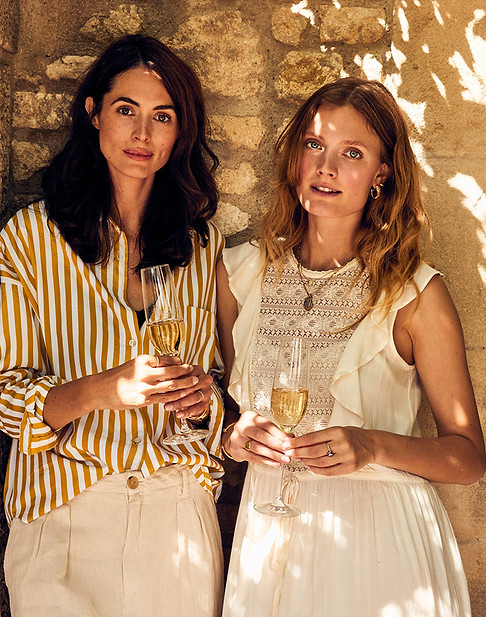

French Bloom founders Maggie Frerejean-Taittinger and Constance Jablonski, and their French Bloom.
For many people, Champagne is tied to celebration. Does removing alcohol change the meaning of that moment, or simply the way it’s experienced and remembered?
Celebration is fundamentally emotional rather than alcoholic, and Champagne has always symbolised connection, joy and marking important moments in life. Removing alcohol may change the sensory experience slightly, but it doesn’t diminish the meaning of the occasion. In some cases, people actually feel more present and more connected when they’re not drinking. What matters most is the intention behind the moment – the people, the atmosphere and the memory being created.
“Champagne has always symbolised connection, joy and marking important moments in life. Removing alcohol may change the sensory experience slightly, but it doesn’t diminish the meaning of the occasion.”
How do your customers typically respond when they encounter a non-alcoholic option in a space so closely associated with consuming alcohol?
Initially there’s often curiosity, but increasingly there’s relief and appreciation. Many people want the option to moderate without feeling excluded or awkward. When a non-alcoholic sparkling wine is presented with the same care and ceremony as Champagne, guests respond very positively. I think hospitality is evolving beyond the idea that luxury must always involve alcohol. People now expect thoughtful options that cater to different lifestyles while still maintaining elegance and occasion.
Do you see alcohol-free sparkling wines as an alternative, an addition, or something entirely separate from Champagne as a category?
I see them as an addition to the broader world of celebration and luxury hospitality rather than a replacement for Champagne itself. Champagne will always remain unique because of its terroir, history and appellation. Nothing replaces that. However, alcohol-free sparkling wines are creating their own premium category alongside Champagne. The best examples complement the experience rather than compete with it.
“… alcohol-free sparkling wines are creating their own premium category alongside Champagne. The best examples complement the experience rather than compete with it.”
From a sensory perspective, what should people be looking for in a high-quality non-alcoholic sparkling wine?
Balance is incredibly important. Many lower-quality alcohol-free wines lean too heavily on sweetness because alcohol normally contributes body and structure. A premium non-alcoholic sparkling wine should still have freshness, texture, acidity and finesse. You want elegance, fine bubbles and a clean finish rather than something overly flavoured or confectionary. The best examples feel sophisticated and gastronomic – they hold their own at the table.
Has the rise in alcohol-free options changed how you think about Champagne itself, such as its structure, its appeal, or its role in social settings?
Absolutely. It has highlighted how much of Champagne’s appeal comes from ritual, emotion and atmosphere rather than simply alcohol content. People are becoming more intentional in how they drink. They may choose Champagne one evening and an alcohol-free option the next depending on the occasion, their wellbeing or simply how they feel. That shift is encouraging the hospitality world to think more broadly about inclusion, experience and modern luxury.
“It has highlighted how much of Champagne’s appeal comes from ritual, emotion and atmosphere rather than simply alcohol content.”
For someone visiting a winery or Champagne house without drinking alcohol, what would you want that experience to offer them?
Champagne is about history, architecture, craftsmanship, gastronomy, hospitality and storytelling – not just the wine. I have had people join me on my Insider’s Champagne tours who do not drink at all! Champagne isn’t just about the wine, it’s the history, people and cuisine. Those elements can be experienced beautifully regardless of whether someone drinks alcohol.

Kyla and her guests on her sold out Insider’s Tour of Champagne.
Do you think the culture around Champagne is beginning to shift, or will tradition continue to define how the category is experienced?
I think tradition will always remain central to Champagne – that heritage is part of what makes it so special. However, we are seeing more innovation in Champagne than we ever had before. I am seeing more progressive winemaking techniques, more edgy and contemporary labels and branding and more nuanced styles of Champagne. The times are changing! Many of the new heirs to the Champagne estates retain a respect for the past and tradition but are putting their new world stamp on the wines, the marketing and wine styles.
There will always be a vein of tradition in Champagne, but culture is evolving. Younger generations approach luxury differently. They value wellness, moderation, flexibility and authenticity in ways previous generations perhaps didn’t prioritise as strongly.
To learn more, visit Kyla’s The Champagne Dame website here https://thechampagnedame.com, and Emperor Champagne’s French Bloom range here. You can also connect with Kyla on Instagram here.